Have you heard about the recent Supreme Court ruling involving the Voting Rights Act? People across the country are asking serious questions about fair representation at the polls, voter protections, and the future of elections — including right here in Ohio. Since this decision could impact redistricting and who communities are represented by, many Ohio voters are wondering how it may affect their voice at the ballot box.
So, what exactly is the Voting Rights Act?
Have you heard about the recent Supreme Court ruling involving the Voting Rights Act? People across the country are asking serious questions about fair representation at the polls, voter protections, and the future of elections — including right here in Ohio. Since this decision could impact redistricting and who communities are represented by, many Ohio voters are wondering how it may affect their voice at the ballot box.
The Voting Rights Act was signed into law in 1965 during the Civil Rights Movement to stop racial discrimination in voting. Back then, many Black Americans during the Jim Crow ERA following the reconstruction, minority communities faced barriers meant to keep them from voting, including literacy tests, intimidation, and unfair laws. The Voting Rights Act was created to protect the right to vote and help make sure every voice had a fair chance to be heard.
One of the biggest parts of the law is Section 2 of the Voting Rights Act, which allows voters and civil rights groups to challenge voting maps or election rules that weaken the voting power of minority communities. In simple terms, it helps stop communities from being politically pushed to the side.
The recent Supreme Court case focused on how states draw voting districts and how Section 2 should be applied moving forward. Voting districts matter because they help determine which communities are grouped together and who gets elected to represent them in Congress and local government. According to the NAACP Legal Defense Fund, Janai Nelson, President and Director-Counsel of the organization, argued the case and has been a leading voice in protecting voting rights and fair representation for minority communities.
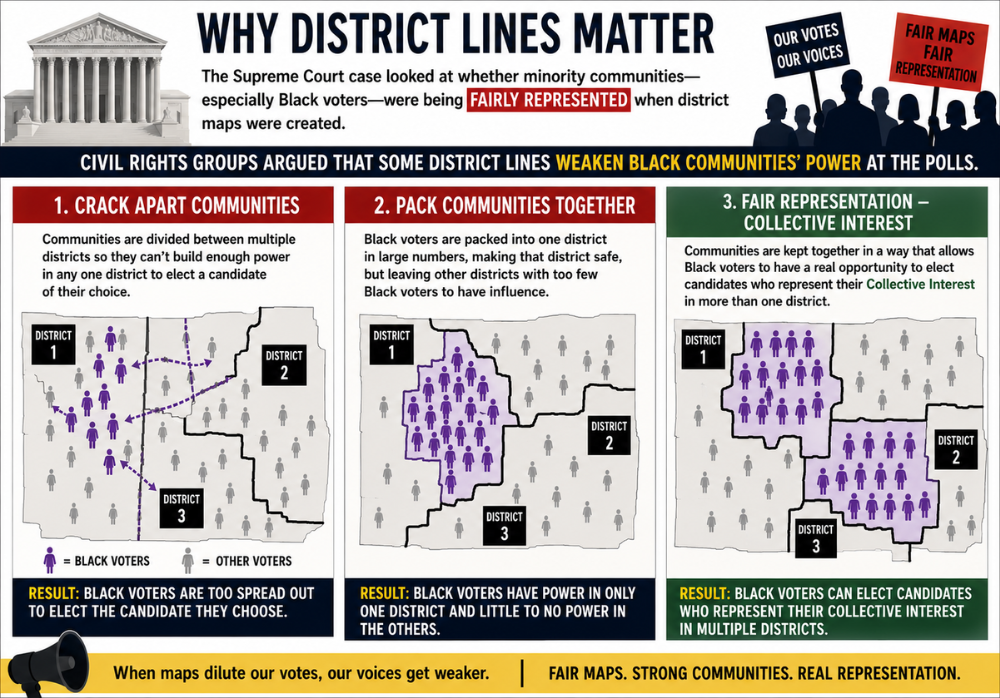
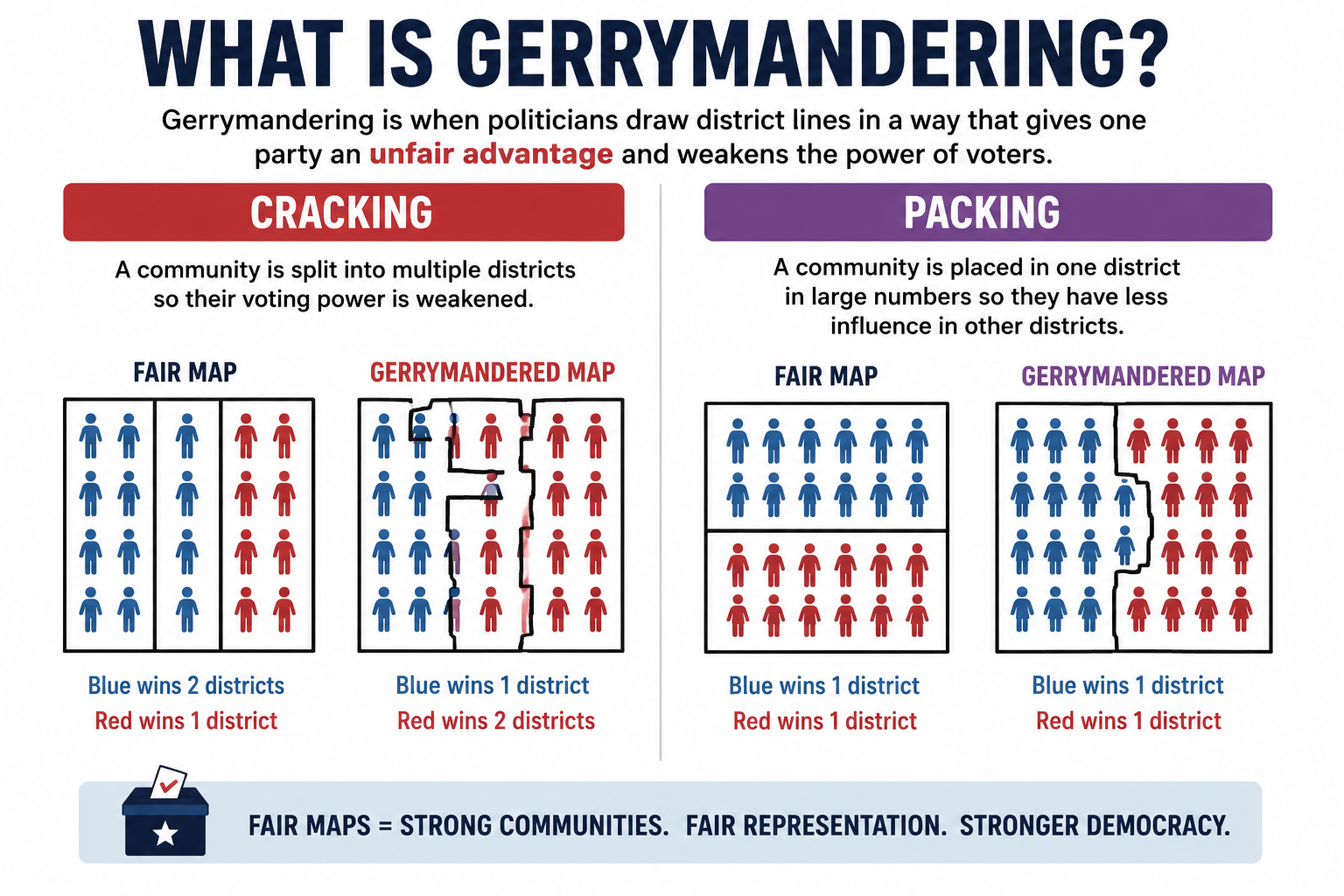
In this case, the Court looked at whether minority communities — especially Black voters — were being fairly represented when district maps were created. Civil rights groups argued that some district lines made it harder for Black communities to elect candidates who truly represented their interests. They believed the maps diluted the voting power of those communities by splitting them apart or grouping them in ways that weakened their influence at the polls. See example below.
The Supreme Court’s decision is important because it could change how future voting rights cases are handled across the country. Critics of the ruling worry it may now become more difficult for communities to challenge district maps they believe are unfair or discriminatory. They believe states could have more flexibility when drawing political maps, even if those maps negatively impact minority voters.
On the other hand, supporters of the ruling argue that race should have a more limited role in redistricting decisions. They believe district maps should not rely too heavily on race and that states need clearer guidelines when balancing representation and constitutional protections.
For states like Ohio, where conversations around gerrymandering and fair representation have already been ongoing, this decision could play a major role in future redistricting battles and voting rights challenges.
So why does this matter for Ohio?
Ohio has already been dealing with ongoing conversations around gerrymandering, congressional maps, and fair representation for years. Many voters have raised concerns about district lines being drawn in ways that benefit political parties instead of the actual communities living there. If protections under the Voting Rights Act become more limited, communities may have to work even harder to make sure every vote truly counts. See example below
This ruling could also shape future redistricting battles in Ohio and change how voting rights cases are handled in court. Civil rights advocates warn that communities historically protected under the Voting Rights Act may face more obstacles when trying to challenge maps they believe weaken their voting power.
At the end of the day, this is bigger than politics. This is about making sure people feel heard, represented, and included in decisions that impact their everyday lives.
That’s why staying informed, showing up for local elections, and understanding how district maps work matters now more than ever. Real change happens when communities stay engaged and organized.
To learn more about voter advocacy and community empowerment, visit our community resources page.
Additional Resources:
Take Action
Our voices matter. Our communities matter. And protecting fair representation matters. Stay informed, stay active, and support efforts that strengthen voting rights and equal representation across Ohio. Get connected with us and help make sure every voice is heard.