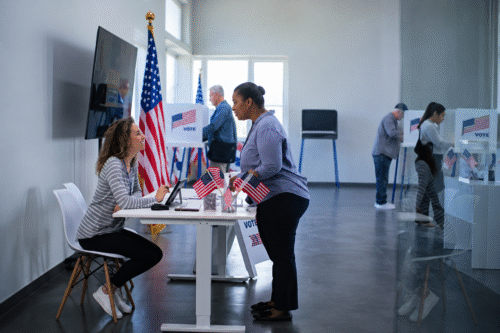
Looking at your ballot can feel overwhelming, especially when it includes unfamiliar offices, judicial races, and questions about proposed laws. If you’ve ever wondered what you’re voting on or what a ballot issue actually means, you’re not alone!
As Ohio prepares for the November 3, 2026, General Election, Ohio Unity wants to help voters feel informed, prepared, and confident when making their voices heard.
You don’t have to be a political expert to understand your ballot. You just need to know what to look for, where to find reliable information, and how to prepare before Election Day.
Start Here: Get Ready to Vote with Ohio Unity

Before researching candidates or ballot issues, take a moment to get your voting information organized. Ohio Unity provides tools to help you prepare.
1. Find Your Polling Place Not sure where to vote? Visit Ohio Unity’s Find My Polling Place tool to get started.
2. Explore Your Personalized Voter Dashboard Visit Power Your Ballot to access Ohio Unity’s personalized voter dashboard and explore the voter information available to you.
Once you’ve reviewed your voting information, the next step is understanding what’s on your ballot.
1. Understand What's on Your Ballot
Your ballot may include candidates running for office, judicial races, and questions asking voters to approve or reject proposed changes.
The exact ballot depends on where you live. Two Ohio residents may see different candidates and local questions in the same election.
To prepare, review your sample ballot before Election Day. You can also consult the Ohio Secretary of State’s official election website for election information and links to local election resources.
2. Know What the Different Offices Do
Your ballot may include several types of elected offices. Understanding their responsibilities can help you research candidates and make informed decisions.
- Governor: Leads Ohio’s executive branch and helps oversee state government.
- U.S. Senator: Represents Ohio in the U.S. Senate and votes on federal legislation.
- U.S. Representative: Represents a congressional district in the U.S. House of Representatives.
- State legislators: Serve in the Ohio House or Senate and consider state laws and budgets.
- Local officials: Depending on where you live, you may see races for county commissioners, mayors, city councils, or school boards.
- Judges: Serve in different courts and handle legal matters according to their court’s authority.
Not every ballot contains all these offices. Read each heading carefully so you understand which position you’re voting on.
3. What Are Ballot Issues?
A ballot isn’t just a list of candidates. It may also include questions asking voters to approve or reject a proposed law, constitutional amendment, tax levy, or other public measure.
For the November 3, 2026, election, voters should check the official election information for confirmed statewide ballot issues and any questions specific to their community.
Local ballots may include:
- School district levies
- Local tax measures
- Bond issues for public projects
- City, county, or township questions
These issues vary by location. A school levy appearing on one ballot may not appear on another.
Before deciding how to vote, read the actual ballot language. Find out what the proposal would change, how it could affect the community, and what its financial implications may be.
4. How Do You Vote on a Ballot Issue?
Ballot questions sometimes use formal or unfamiliar language. Take your time and break the question down into smaller parts.
Ask yourself:
- What is the proposal asking voters to approve or reject?
- What would change if it passes?
- Who or what could be affected?
- Would it create a tax, change a law, or authorize public spending?
- Where can I find the official explanation?
A “Yes” vote generally supports a proposal as presented, while a “No” vote generally opposes it. However, always read the exact wording because the effect of each choice depends on the question.
You don’t have to make a decision based on a headline or someone else’s opinion. Review reliable information and make the decision that reflects your own judgment.
5. How to Read and Mark Your Ballot
A ballot can look complicated at first, but understanding its basic structure can make the process less intimidating. The infographic below is an educational illustration, not an official Ohio ballot. Actual ballots and marking instructions can vary.
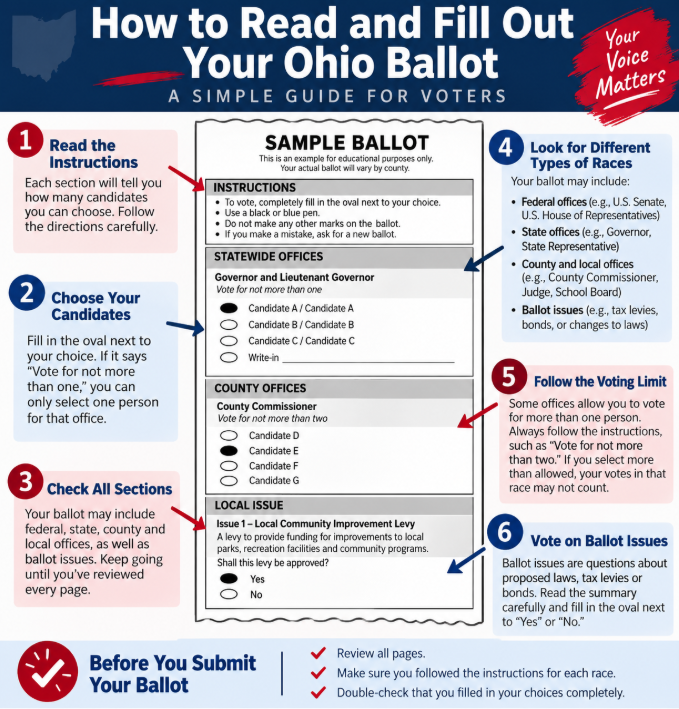
As you review your ballot, remember these tips:
- Read the instructions. Each contest may have different directions.
- Check how many candidates you may select. Instructions such as “Vote for not more than one” or “Vote for not more than two” tell you the maximum number of choices allowed.
- Follow the marking directions. Your ballot may use specific instructions for filling in a selection.
- Review every section. Don’t overlook additional pages, judicial races, or ballot questions.
- Ask for help if needed. If you make a mistake or have trouble understanding the process, ask an election worker for assistance.
6. Research Candidates Before You Vote
You may recognize some names on your ballot but not others. Reviewing candidates ahead of time can help you feel more prepared.
Consider researching each candidate’s experience, public statements, policy positions, and priorities. Look for reliable information from multiple sources, and distinguish documented facts from campaign claims and personal opinions.
For judicial races, learn about the responsibilities of the court and review candidates’ qualifications and professional backgrounds.
7. Make Your Voting Plan
Once you’ve reviewed your ballot, take a few minutes to prepare for Election Day.
- Find your polling location: Start with Ohio Unity’s Find My Polling Place tool to get started.
- Explore your voter information: Visit Power Your Ballot to access your personalized voter dashboard.
- Review your sample ballot: Learn which candidates and issues may appear on your ballot.
- Research unfamiliar candidates and ballot questions: Take time to understand your choices before voting.
- Confirm official election details: For additional information about voting dates, hours, identification requirements, and election procedures, visit the Ohio Secretary of State’s website.
Starting with Ohio Unity helps you access our voter resources in one place, while official state resources provide additional election details.
Your Voice Matters
Understanding your ballot is an important part of participating in your community. Whether you’re voting for a statewide candidate, choosing local representatives, or considering a ballot issue, taking time to learn about your choices can help you approach Election Day with greater confidence.
Share this guide with a neighbor, friend, or family member who may have questions about voting. If you’re a Block Leader, help your neighbors find their polling locations, review their voter information, and locate reliable election resources.
An informed community starts with informed voters. Your neighborhood. Your voice. Your vote.